
Filippo Dattola

Filippo Dattola
Over a decade animating characters and creatures for high-end cinematic productions, and more than fifteen years teaching animators to reach the same standard. This is the work, the path, and the method behind SquashnStretch.net.
Who I Am
I did not come through a film school or a studio graduate scheme. I taught myself, worked as a freelancer, and eventually paid for the mentorship that got my reel to studio level. Everything I teach comes from having been on both sides of that.
The Path
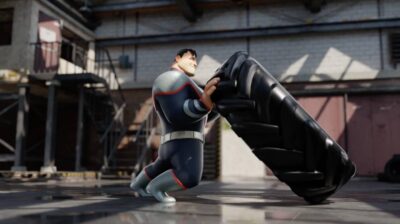
I started in computer graphics in Southern Italy at a time when there were no animation schools within reach and almost no resources in Italian. I taught myself, working as a freelancer across modelling, editing and graphics — I was the first Pixologic Certified Instructor for ZBrush in the country — while moving steadily towards what I actually wanted to do: making characters move.
Self-teaching got me a long way and then stopped working. My reel was not good enough for the studios I wanted, and I could not see why on my own. So I paid for structured mentorship and rebuilt it under professional review. That reel got me my first studio role in feature animation, then a move into visual effects, and from there into one of the world’s most respected visual effects houses, where I now work as a Lead Animator on large-scale cinematic productions.

Inside the Production Room
Most animation teaching is built on principles. Principles matter, but they are not what gets a shot approved. What gets a shot approved is judgment: knowing which of five defensible choices the sequence actually needs, knowing when a note is about the animation and when it is about the edit, knowing when a shot is finished and when you are just moving keys around.
That judgment is only visible from inside a running production, and it changes. The standard for a creature shot today is not the standard of five years ago. Because I am still animating on current productions rather than teaching full time, what I pass on is the standard as it is being applied right now, not as I remember it.
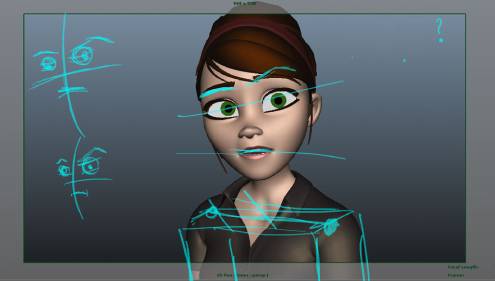 Photo: SquashnStretch.net archive
Why I Only Teach 1-on-1
I have taught in group formats and I stopped. In a class of fifteen, the feedback has to be general enough to be useful to everyone, which makes it useless to each individual. The animator who cannot see weight and the animator who cannot see subtext need opposite conversations, and neither gets one.
Working one to one, I can be specific. I can tell you the thing you personally are not seeing yet, in your shot, and then watch whether you start seeing it in the next one. The mentorship runs over ten phases at your own pace, because people do not develop on a term schedule.
This limits how many animators I can take. That is the trade, and I would rather make it.
See how the path is structured: the 10-phase mentorship.

Where My Students Ended Up
Animators I have mentored are now working at Framestore, MPC, DNEG, Disney Animation, Illumination Studios Paris, Pixomondo and Ghost, on productions people have actually heard of. Some arrived already working and wanted a reel that would move them up; others had never had a professional review in their lives.
The placements matter, but they are not the point. The point is that they came out able to critique their own work without me. An animator who can see their own mistakes does not need a mentor twice.
Read what they said in their own words on the mentorship page.
Tools and Free Resources
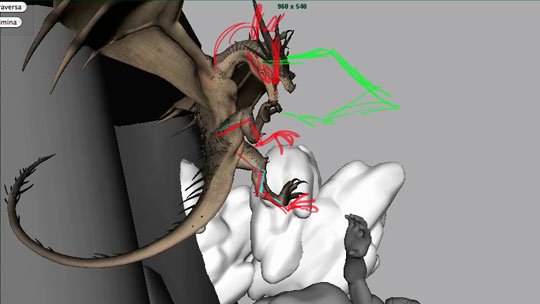
Production work throws up small problems constantly, and I tend to write a tool rather than live with the friction. Several of those Python tools for Autodesk Maya are available free, along with video tutorials on workflow, reference handling and shot sequencing.
There is also a free reel breakdown: It is the fastest way to improve your reel and find out what studios actually look for.
Get your free reel breakdown, or browse the free Maya tools.
Working With Filippo Dattola
I am not interested in taking on everybody. The animators who get the most out of this are the ones who already work hard and are stuck for a reason they cannot identify on their own, which is almost always a matter of taste rather than technique.
If that sounds like where you are, the application below is short. It exists so that we both find out whether this is the right fit before anyone commits.
Stay in the Loop
Occasional animation insights, student results and free tools. No spam, just useful content.
You’re in! We’ll let you know when new content drops.
Train 1-on-1 With Me
Structured mentorship for animators serious about a career in VFX and feature animation.
Develop your eyeLearn to identify what is wrong in your own shot before anyone tells you, which is the skill that sustains a career.
Build a competitive reelEvery phase produces finished, portfolio-grade work, not exercises that stay in a folder.
Work to production standardsReceive the same kind of notes given in dailies on large-scale cinematic productions.