Quadruped Animation: Common Mistakes and Fixes
Animating quadrupeds is one of the most challenging skills in character animation. Learning to avoid Quadruped Animation mistakes is essential for creating realistic animal or creature motion. Even small errors in weight, timing, or structure can immediately break the illusion.
In this guide, we’ll cover the 7 most common Quadruped Animation mistakes and, importantly, how to fix them using a production-focused approach.
Mistake 1: Ignoring Real-World Biomechanics in Quadruped Animation
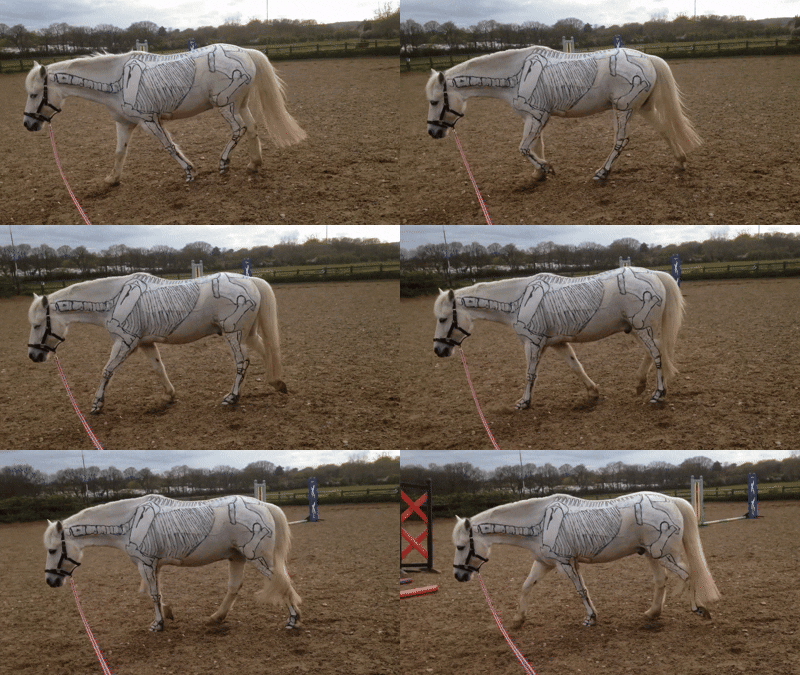
Animators often jump straight into animating quadrupeds without carefully studying how real animals move. This is especially common when working under tight deadlines or when animators are used to bipeds. The result? Legs that don’t hit the ground convincingly, bodies that seem to float, and overall motion that feels disconnected from reality. Even small errors in biomechanics can make a quadruped walk or run look “off,” breaking the illusion instantly.
- Dogs and cats → flexible, dynamic
- Horses and large animals → structured rhythm
- Creatures → believable hybrid logic
Fix:
- Always start with video reference
- Identify contact, passing, and lift phases
- Block core motion before adding detail
Suggested Media: Slow-motion GIF of a horse walk, frame breakdown of a dog trot
Mistake 2: Weak Weight Distribution in Quadruped Animation
A believable quadruped always feels grounded. One of the most common mistakes is uneven or floating weight. Animators might give each foot equal timing or ignore how the center of mass shifts as the animal walks, trots, or runs. This creates animations that feel disconnected from gravity and mass, even if the leg movements themselves look correct.
Animations feel ungrounded if the weight isn’t handled correctly. Common issues:
- Floating body
- No clear foot impact
- Even timing regardless of mass
Fix:
- Track the center of mass at every step
- Adjust body reaction after foot contact
- Timing adjustments based on animal size and weight
Suggested Media: Diagram of center of mass shifts in quadrupeds
Mistake 3: Stiff Spine and Torso in Quadruped Animation
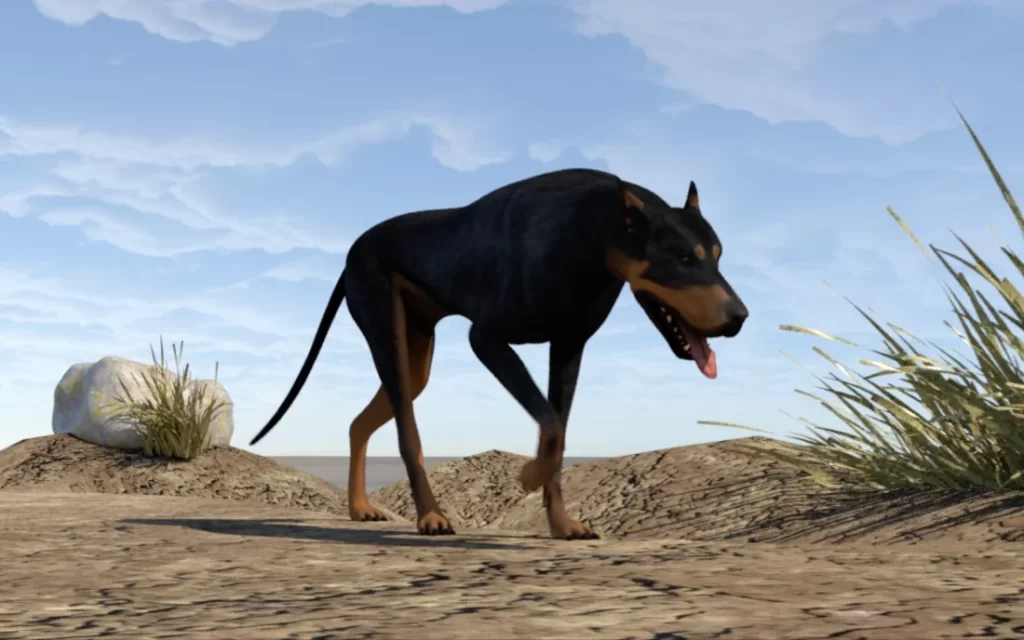
The spine is the engine of a quadruped’s motion. A rigid torso prevents energy from flowing naturally, making movements robotic. Many beginners key the torso in blocks or keep all controls on the same frame, which kills the subtle arcs and waves that make a creature feel alive. Without a flexible spine, even a perfectly timed gait can feel mechanical.
Fix:
- Treat spine as a wave traveling through the body
- Offset hips and shoulders to create natural flow
- Avoid keying all controls on the same frame
Suggested Media: GIF showing wave motion along spine
Mistake 4: Poor Leg Coordination in Quadruped Animation
Quadrupeds follow precise leg patterns for walking, trotting, or galloping. A common error is breaking these patterns, causing the legs to collide, float, or move out of sync. Even small misalignments in spacing or timing can immediately alert the viewer that something is off, disrupting suspension of disbelief.
Fix:
- Study real gait cycles
- Keep spacing consistent
- Use clear contact poses before refining
Suggested Media: Reference chart of quadruped gait cycles
Mistake 5: Unnatural Head and Tail Motion in Quadruped Animation
Animators often treat the head and tail as secondary or optional. The mistake is animating them independently of the main body or leaving them static. Without proper head and tail motion, the character can look stiff, disconnected, or emotionally flat. The flow of the tail and the orientation of the head provide visual cues about energy, balance, and intent.
Fix:
- Animate head and tail after main body
- Add subtle delay and overlap
- Follow energy of the motion
Suggested Media: Side-by-side comparison GIF: correct vs incorrect tail/head motion
Mistake 6: Missing Overlap and Secondary Motion in Quadruped Animation
Secondary motion—such as follow-through in the spine, tail, or shoulders—is what gives quadrupeds life. Beginners often animate body parts simultaneously, creating stiff, unnatural motion. Proper overlap ensures that energy transfers realistically across the body, making each step and movement feel organic.
Fix:
- Offset keys across body parts
- Add follow-through for spine, tail, shoulders
- Check arcs and fluidity
Suggested Media: Video breakdown showing secondary motion in quadrupeds
Mistake 7: Not Analyzing Reference Properly in Quadruped Animation
Simply watching reference is not enough.
Fix:
- Identify key phases: contact, passing, lift
- Study timing and spacing, not just poses
- Compare animation frame-by-frame
Suggested Media: Annotated reference frame from real animal footage
Final Thoughts on Quadruped Animation Mistakes
SStrong quadruped animation relies on three fundamentals:
- Clear weight
- Solid timing
- Natural motion flow
If these work, the animation feels believable. If not, no amount of polish will fix it.
Interesting Links:
🔗 Take It Further
If you want to push your skills further and learn advanced quadruped and creature animation in a production context, check out our course: