
How to Become a
Character & Creature Animator
How to become a creature animator — or a character animator, for that matter — is one of the most searched questions among aspiring animators, and one of the least honestly answered. Most guides list software and generic career steps that could apply to any 3D discipline.
This guide covers what actually determines whether you become a character animator, a creature animator, or both: the software that matters, the career ladder and what changes at each step, the training routes and what they are really worth, the money, and the reel mistakes that quietly end applications.
Why This Path Is Rarely Explained Honestly
Nobody plans a fake reel on purpose. But without knowing what a supervisor is actually testing for, most animators end up building one anyway.
The Short Answer
To become a creature animator you need three things, in this order: solid character animation fundamentals, a short reel of shots that hold up under scrutiny, and Maya. That is genuinely the list. Everything else — degrees, additional software, rigging knowledge, drawing ability — is useful but not what gets you hired.
There is no fixed timeline. In over ten years of mentoring, roughly eight out of ten of the animators I have worked with who completed the character animation phases and built a solid reel started working shortly afterwards. Others have arrived already advanced but stuck, and found work after one or two focused workshops building professional shots for the reel.
Salary depends on experience, the kind of experience, the city, and whether you need a visa. Creature work is not a separate entry route — it is a specialisation that grows out of character animation, which is why the fundamentals come first on that list and not last.
What the Job Actually Is
Career guides list job titles. What they rarely explain is what changes between them — which is the thing you actually want to know, because it tells you what you are being measured against right now.
| Level | What is expected of you |
|---|---|
| Junior | Attentive, active, a fast learner. You are given shots you can complete and notes you are expected to address properly the first time. |
| Mid | Very similar to junior in expectation, with more independence. The difference is reliability rather than a change in the kind of work. |
| Senior | You take the complicated shots, and you start helping the juniors around you. Mentoring becomes part of the job, not an extra. |
| Lead | The point where it stops being purely artistic. You often get the tricky, technical shots first to set the level for the sequence, you work closely with rigging and other departments, and you carry production and team management. |
| Supervisor | Similar ground to lead, plus running dailies, looking after the rigs, and bidding shots. |
Two things follow from this. First, junior and mid are closer together than the titles suggest — the real jump is senior, where you become responsible for other people’s work as well as your own. Second, if you are aiming at lead or supervisor eventually, the technical and communication side is not optional. Plenty of excellent animators stop at senior because that part never interested them, and that is a legitimate choice, but it is a choice.
Creature animator is not a separate ladder. It is a specialisation that sits inside it.
Software: What You Actually Need
Every career guide gives you a list — Maya, ZBrush, After Effects, Houdini, Blender, motion capture pipelines. It reads as though you need all of them. You do not.
Maya is the standard, and it is not negotiable. That is the whole requirement. Knowing other packages is a bonus, and occasionally a useful one, but it is absolutely not necessary and it will not compensate for weak animation. Nobody has ever been hired because they also knew ZBrush.
Motion capture is worth understanding, but not in the way it is usually presented. You are unlikely to be asked to run a capture session. What happens in practice is that data arrives already processed and the animator adjusts it — fixing contacts, restoring weight the capture lost, pushing performance the actor could not physically give a non-human body. That is animation work, not software work, and it is the same skill set as everything else on this page. Which is the point: there is no separate technical track that lets you skip the fundamentals.
Training: Degree, Online, or Self-Taught
I have taught on university courses, and a good number of the animators I mentor come from exactly that background. So this is not an argument against formal education — it is an argument about what it does and does not give you.
A traditional course is genuinely good for one thing: working out which part of this industry you want to be in. You touch modelling, texturing, rendering, compositing, animation, and you come out knowing which of them you actually want to do every day. That is not a small thing, and plenty of people waste years without it.
What it does not give you is depth in any one of them. And doing a bit of everything does not pay any more. The industry hires specialists. A generalist reel with one competent animation shot, one model and one lighting test reads as undecided, and undecided does not get shortlisted against someone whose entire reel is animation.
Self-teaching works for some people, but the failure mode is consistent: you get technically clean and stay physically illiterate, because nobody is telling you the weight is dishonest. The variable that actually matters is not the format — degree, online, or on your own. It is whether someone experienced is regularly pulling your work apart and naming what is wrong with it. Without that feedback loop, all three routes stall in the same place.
If you already have a broad foundation and need to go deep on one thing, that is exactly what 1-on-1 mentorship is built for.
Money and Timeline: The Honest Version
Career guides publish salary tables. I am not going to, because this is an artistic job and the tables are fiction. What determines the number is a set of variables, and knowing the variables is more useful than a figure that will be wrong for your situation anyway.
Experience, but the real kind. A junior with no experience and a junior with two years are both called junior and are not paid alike. And it is not just the years — it is what those years contained. Two years of finished shots that went through dailies is not the same as two years of personal projects.
Where you are. Cost of living moves the number substantially, and a higher salary in an expensive city is not automatically a better offer.
Whether you need a visa. This is the part nobody explains, and it works in your favour to understand it. If a studio has to sponsor you, your salary is not just negotiated — there is a legal floor beneath it. In the UK, a sponsored Skilled Worker role has to clear a threshold set by the Home Office, which as of 2026 sits north of £38,000 for most cases, with a lower rate for new entrants to the labour market. It has moved three times in two years, so check the current figure on gov.uk before you plan around it. The practical consequence: a studio cannot sponsor an overseas junior at a local junior salary, which is why sponsored roles are harder to get and better paid when you get them.
On timeline, there is no fixed answer either. What I can tell you is what I have seen. In over ten years of mentoring, roughly eight out of ten of the animators I have worked with who completed the character animation phases and built a solid reel started working shortly afterwards. More recently I have also seen animators who were already advanced but not working find a job soon after one or two workshops spent exclusively on professional shots for the reel. Those are my own numbers from my own students, not an industry statistic — but the pattern behind them is consistent: the reel is the bottleneck, not the years.
Does AI Change Any of This?
It is the question every animator entering the field right now is actually asking, and most career guides avoid it because an honest answer is bad for enrolment.
My position is straightforward. AI will not fully replace the human contribution to animation. It will help with technical work, and it will most likely thin out departments like previs and crowd, where volume matters more than nuance. That is a real change and it is worth planning around.
But performance requires human sensibility, and that has not become less scarce — it has become more valuable. Which means the conclusion runs opposite to the panic: studying the artistic fundamentals properly matters more now, not less. They are what gives you a chance of being in the permanent core team rather than in the layer of work that gets automated first.
Character Animator or Creature Animator? Same Root, Different Branch
Every generic career guide treats these as separate menu items — pick character, pick creature, pick FX — as if you choose on day one and specialise from there. In production it does not work that way. Both paths share the exact same trunk: solid character animation. Creature work is a branch that grows off it later, not a parallel track you can start on independently.
If your goal is to become a character animator, that trunk is also your destination — dialogue, acting, subtlety of performance, all built on the same weight-and-timing fundamentals. If your goal is creature animation, that trunk is simply where the real test begins, because a creature has no dialogue to hide behind, no wardrobe, no familiar human silhouette to lean on for readability. Either way, the fundamentals are non-negotiable and identical.
Fix:
The Skills You Need Before You Can Call Yourself an Animator, Character or Creature
This is not the place to re-teach body mechanics — that groundwork lives in its own dedicated breakdown. But before you commit to either branch, be honest with yourself about where you actually stand against this shortlist:
- Weight and timing hold up without being told to “add more anticipation” in review
- You can pose off-model and still read the intention clearly
- Arcs and overlap survive contact — not just in isolated tests
- You can watch real animal or reference footage and explain why it moves that way, not just describe what it looks like
Fix:
If any of these feel shaky, that is the actual starting point regardless of which branch you’re aiming for — our advanced body mechanics mentorship is built to close that gap first.
The Reel Mistake That Stops You Becoming a Character or Creature Animator
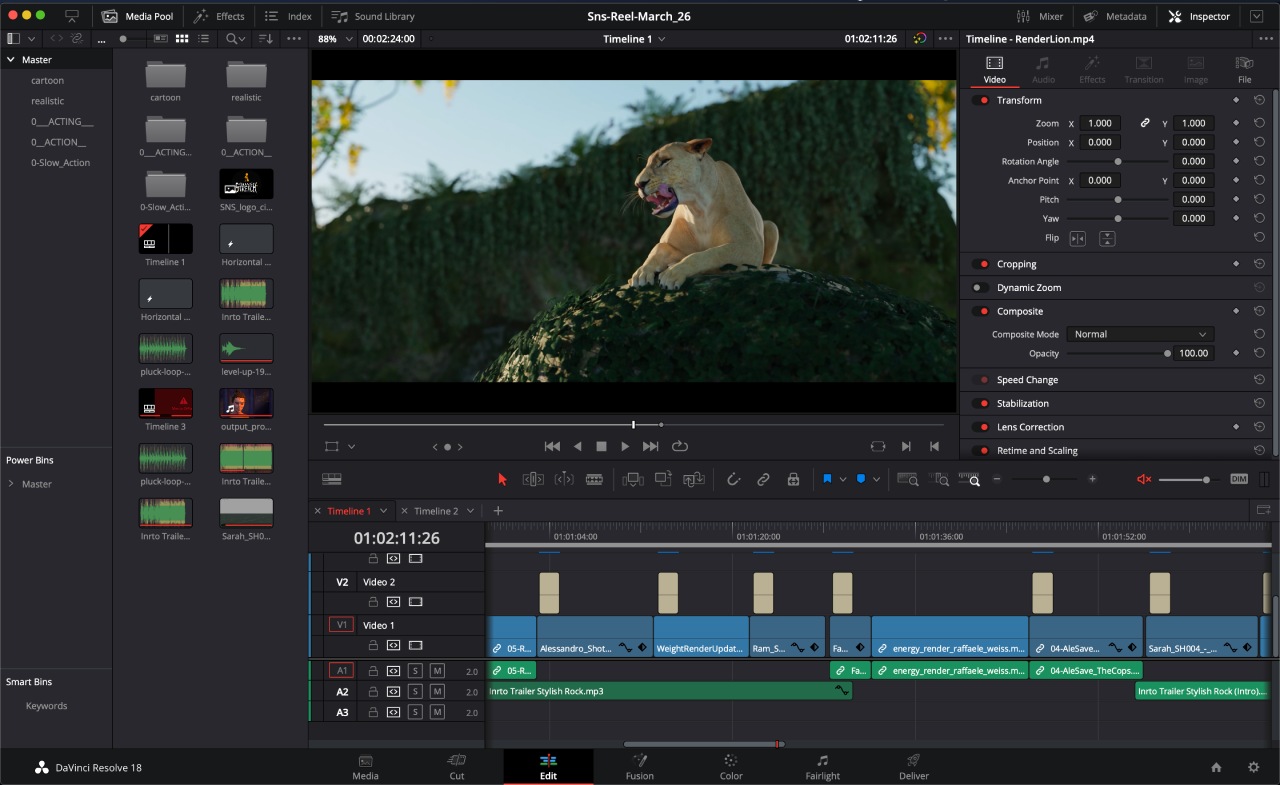
This is the pattern I see more than any other in reel reviews, and it is almost never intentional dishonesty — it is impatience. An animator wants to apply now, the reel feels thin, so an old test, a weak shot, or something that was never really finished gets pulled in just to make the reel look longer.
It never works the way it is meant to. A reel is not judged by its runtime. Every shot resets the supervisor’s attention and their trust in you. One noticeably weaker shot placed anywhere in the reel does not get averaged out by the strong ones around it — it gets remembered as “the weak one,” and it raises a question that is hard to unask: did they not notice it was weak, or did they notice and include it anyway?
Fix:
Why “Put Your Best Shot First” Won’t Help You Become an Animator
It is correct advice, technically. It is also almost useless in practice, because it assumes the one thing most junior animators do not yet have: the ability to tell which of their own shots is actually the strongest.
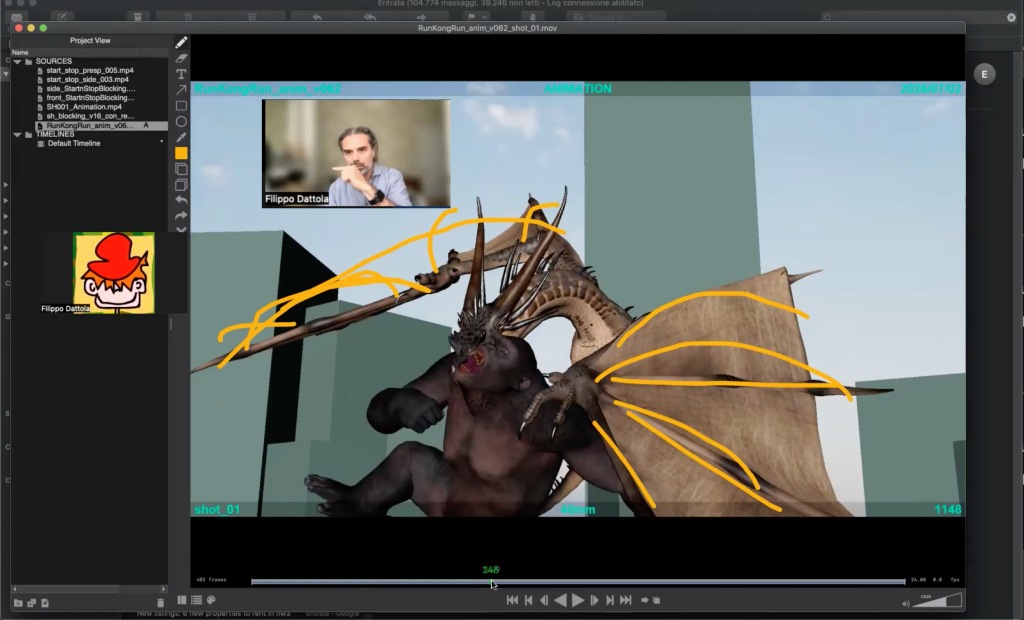
When you have animated every shot yourself, you know the intention behind each one — you remember the version before the fix, the note you addressed, the effort it took. That memory makes it nearly impossible to judge a shot the way a stranger seeing it cold for the first time will. The shot you are proudest of is often not the one that reads best in eight seconds of silence.
Fix:
This is exactly the kind of calibration we work through in 1-on-1 mentorship — reviewing reels the way a supervisor actually would, whether you’re heading towards character or creature work.
What Really Happens When a Supervisor Opens Your Animator Reel
There is no dramatic pause, no benefit of the doubt. In the first few seconds, a supervisor is reading exactly two things: does the weight feel real, and does the pose read instantly without needing to study it. Everything else — the concept, the rig, the lighting — is secondary at this stage.
A shot survives a rough patch if the foundation underneath it is solid — the timing recovers, the weight holds, the intention is still legible even where the polish is not. A shot does not survive if the foundation is the problem, because no amount of secondary motion or fur simulation can fix weight that never felt real in the first place.
Fix:
The Honest Timeline to Becoming a Character or Creature Animator
There is no shortcut version of this answer, and anyone offering one is selling something. Solid character animation fundamentals alone typically take a few years of consistent, critiqued practice — not just personal projects, but work that has been pulled apart by someone more experienced than you. Creature specialisation sits on top of that foundation, not alongside it.
The realistic marker is not a calendar date, it is a quality bar: when your character work stops needing basic notes in review and the notes shift to nuance and performance choices instead, that is when a creature reel becomes worth building.
Fix:
Final Thoughts on Becoming a Character or Creature Animator
Whichever branch you’re aiming for, it comes down to three things:
- Character animation fundamentals have to be solid first — not skipped, not shortcut, whether you stop there or specialise further
- A shorter, honest reel will always beat a longer, padded one
- You cannot judge your own reel alone — get an outside eye before anyone else sees it
None of this is glamorous advice, but it is the advice that actually changes whether a reel gets a second look — for a character role or a creature one.

Stay in the Loop
Get notified when we publish new animation insights and tutorials. No spam, just useful content.
You’re in! We’ll let you know when new content drops.
Want Personalised Feedback?
Submit your animation reel and get a free professional breakdown with specific notes on what to improve.
Get a Free Reel BreakdownReady to Become a Character or Creature Animator?
Whichever branch fits where you are right now, both start with the same 1-on-1 review from a lead animator from major VFX studios — real production examples, shot breakdowns, and honest feedback on your reel.
Still building your fundamentals? — the Advanced Body Mechanics mentorship closes the weight, timing and arcs gaps that show up in every reel review, character or creature.
Fundamentals already solid, ready to specialise? — the Creature Animation Course builds the reel that survives the first eight seconds of a supervisor’s attention.
Not sure which one is right for you yet? Send us your reel first.
Get a Free Reel Breakdown